Research
Computational Mechanics and Dynamics
Molecular Dynamics · Discrete Element Method · Finite Element Method
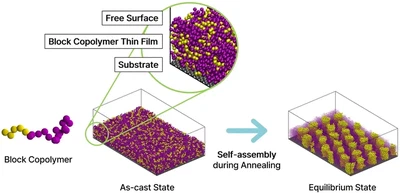
We apply bottom-up, predictive modeling and simulation to understand the complex behaviors of polymers and develop material design principles for the discovery of multifunctional, high-performance, and advanced polymers. We isolate the effects of parameters and determine structure–morphology–property relations of polymers.
Data-Driven System Design
ML Algorithms · Autonomous Experimentation · High-Throughput Simulation
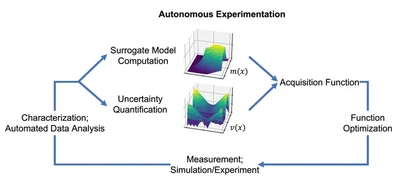
The properties of a given material are typically influenced by a host of parameters. We take full advantage of every simulation and experiment by deploying autonomous experimentation (AE) methods, in which machine learning algorithms enable autonomous data acquisition with surrogate model computation and uncertainty quantification — enabling high-throughput exploration of vast parameter spaces.